

TL;DR:
- Data-driven research identifies high-demand niches like hobbies, professions, and seasonal themes for better sales.
- Targeting micro-niches with specific audience connections increases purchase intent and loyalty.
- Simple, bold, and highly legible designs in classic colors like black and white outperform complex artwork.
You’ve been there. You buy a t-shirt that feels perfect, wear it once, and it disappears into the back of the drawer. Or you stock a design you love, and nobody buys it. The frustration is real, and it happens to casual shoppers and sellers alike. The good news is that picking winning t-shirts isn’t guesswork anymore. Real marketplace data, trend tools, and a repeatable research process now make it possible to choose designs that people actually want to wear and buy. This guide walks you through every step: researching profitable niches, targeting micro-niches, choosing colors, designing for conversions, and testing to find your true best-sellers.
Table of Contents
- Research high-demand t-shirt niches
- Target micro-niches that connect with buyers
- Pick the right colors for maximum sales
- Design for sales: clarity, humor, and trend
- Test, iterate, and verify winners
- The real secret to picking best-sellers: data beats instincts
- Find your next best-selling t-shirt with 3 Wizard Clothing
- Frequently asked questions
Key Takeaways
| Point | Details |
|---|---|
| Use marketplace data | Research trending niches and micro-markets with tools like Google Trends and Etsy bestseller lists. |
| Prioritize micro-niches | Humor, pets, family matching, and seasonal themes connect powerfully with buyers. |
| Pick top-selling colors | Stick to black, white, navy, and gray for maximum compatibility and consumer demand. |
| Focus on clear design | Bold fonts and readable, funny slogans drive high conversion rates and algorithm exposure. |
| Test and iterate designs | Launch small batches, measure sales for 30 days, and refine winners to scale your best sellers. |
Research high-demand t-shirt niches
Before you sketch a single design or add anything to a cart, you need to know what the market actually wants. Most people skip this step and go straight to what they personally find funny or cool. That’s where the disconnect starts.
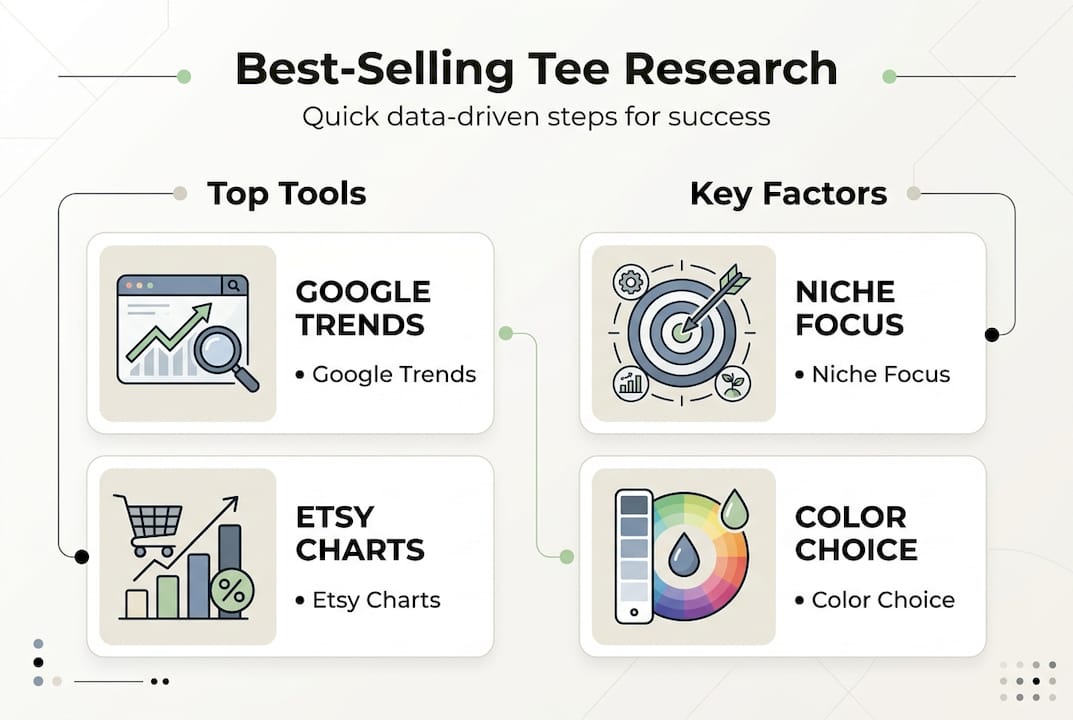
The smartest move is to use data-driven research tools like Google Trends, Etsy best-sellers, and marketplace analysis to identify high-demand, low-competition niches before designing. Google Trends shows you search volume over time, so you can spot whether a niche is growing, peaking, or fading. Etsy best-seller lists show you what people are actually paying money for right now.
Not all niches perform equally. Hobby tees, profession-based tees, and seasonal designs consistently outperform generic graphics. Why? Because they speak directly to a person’s identity. Someone who loves hiking doesn’t just want a mountain graphic. They want a shirt that says they are a hiker. That emotional connection drives purchases.
According to marketplace data, Etsy top niches show hobbies generating 450 to 800 sales per month and professions generating 350 to 700 sales per month. Those numbers are consistent and repeatable, not one-hit wonders.
Here’s a quick comparison of the three main niche types to help you prioritize:
| Niche type | Avg. monthly sales | Competition level | Repeat buyer potential |
|---|---|---|---|
| Hobby-based | 450-800 | Medium | High |
| Profession-based | 350-700 | Medium | Medium |
| Seasonal/holiday | 200-600 | High (peak) | Medium |
When you’re starting out, hobby and profession niches give you the most stable returns. Seasonal niches spike hard but require precise timing.
Here are the best places to start your niche research:
- Google Trends: Compare search interest for niche terms over 12 months
- Etsy search bar: Type a keyword and look at auto-complete suggestions
- Etsy best-seller filters: Sort by most reviews to find proven winners
- Amazon Merch on Demand: Browse top charts for trending categories
- Reddit and Facebook Groups: See what communities are talking about
For a deeper look at what’s already working, check out this popular tees guide and the latest t-shirt trends 2026 to see which styles are gaining momentum right now.
Target micro-niches that connect with buyers
Once you know the top-level niches, it’s time to refine your choice to micro-niches that truly resonate. A micro-niche is a highly specific segment within a broader category. Instead of “dog lover tees,” you target “golden retriever mom shirts.” Instead of “nurse tees,” you go for “night shift nurse humor.”
Why does this matter? Because specificity creates instant recognition. When someone scrolls past a shirt that feels made exactly for them, they stop. That pause is where conversions happen.
Marketplace data confirms that micro-niches for young adults and families, including humorous graphics, pets, professions, hobbies, seasonal and holiday themes, ironic wellness, and family events, consistently drive strong purchase intent. These aren’t random categories. They tap into real identity markers that people wear proudly.
One of the most interesting data points: 45% of parents prefer humorous kids tees, Etsy family matching shirts rank among top sellers, and micro-niches like ironic run clubs show high profit margins. Parents want to dress their kids in something that makes people smile, not just something that fits.
Top micro-niche categories to consider:
- Matching family sets: Vacation themes, holiday editions, reunion shirts
- Pet-specific humor: Breed-specific jokes, “dog mom” and “cat dad” styles
- Ironic wellness: “I workout for tacos,” yoga humor, fitness sarcasm
- Event tees: Bachelorette parties, birthdays, school spirit
- Seasonal themes: Halloween, fall harvest, summer camp vibes
For families specifically, humorous kids tees are a proven category with strong repeat purchases. Parents come back for every season and every milestone. You can also explore kids graphic apparel and youth graphic tees for more inspiration on what young shoppers actually respond to.
Pro Tip: Always validate age and context appropriateness for your micro-niche before ordering inventory. A shirt that’s hilarious to a 25-year-old might not work for a kids’ line. Mismatched audience targeting is one of the top causes of returns and low reviews.
Pick the right colors for maximum sales
After locking in a micro-niche, color decisions can make or break your t-shirt’s appeal. This is one of the most overlooked variables in t-shirt selection, and it’s backed by hard data.
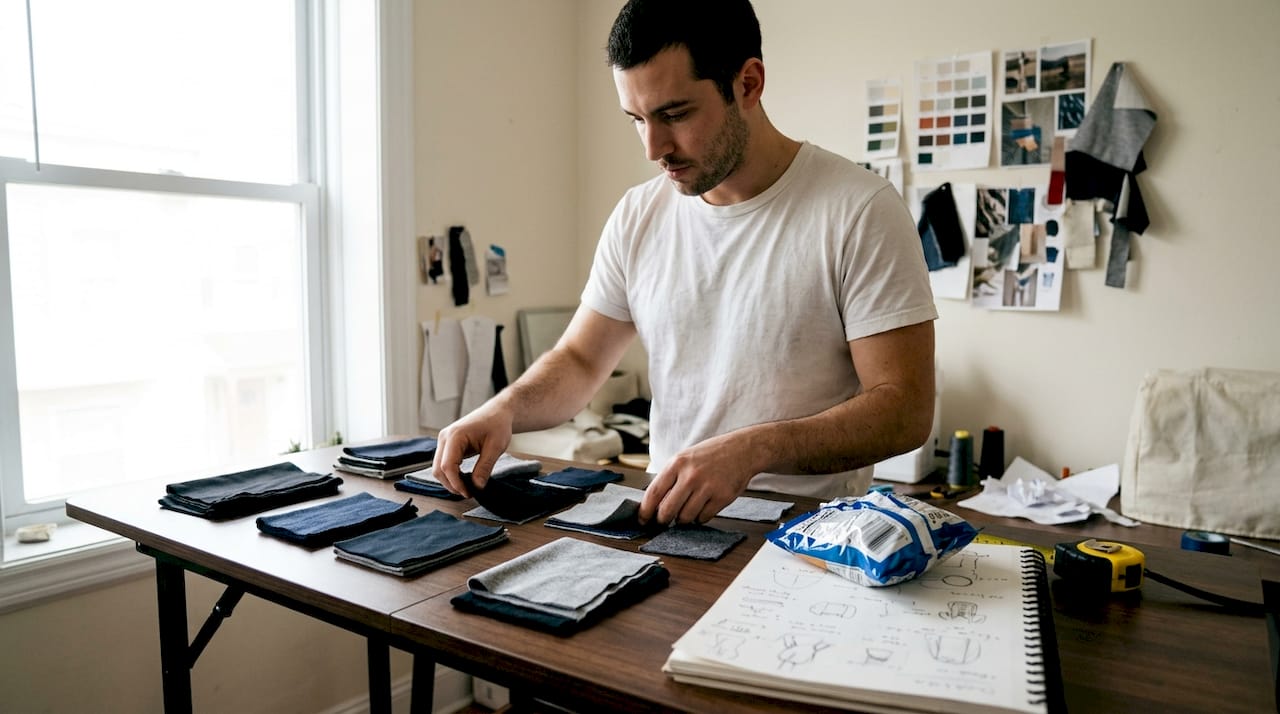
Top-selling t-shirt colors are black, white, navy, gray and heather, and athletic heather, chosen for their print compatibility and consistent consumer demand. Black dominates because it makes graphic prints pop with maximum contrast. White is a close second for minimalist and pastel designs. Navy and gray offer versatile options for both bold and subtle graphics.
Here’s how those colors perform across different design types:
| Color | Best for | Print quality | Sales rank |
|---|---|---|---|
| Black | Bold graphics, humor slogans | Excellent | #1 |
| White | Minimalist, pastel, watercolor | Very good | #2 |
| Navy | Classic, vintage, collegiate | Good | #3 |
| Heather gray | Soft graphics, retro styles | Good | #4 |
| Athletic heather | Active, sporty designs | Good | #5 |
Color mistakes are costly, especially when you’re ordering inventory in bulk. Here’s what to avoid:
- Avoid trendy seasonal colors for your core inventory. They look great in March and sit unsold by June.
- Skip light-on-light combinations. A yellow graphic on a white shirt is nearly invisible in photos.
- Don’t ignore fabric undertones. Some “white” shirts have a cream undertone that changes how colors print.
- Limit your color range early on. Start with two or three proven colors before expanding.
Pro Tip: Black tees offer unmatched print quality and sell-through rates across nearly every niche. If you’re unsure which color to start with, black is almost always the right answer. It photographs well, ships clean, and holds graphic detail better than any other base color.
For more on what’s trending in color palettes this year, the color trends 2026 guide breaks down what’s gaining traction across casual and novelty apparel.
Design for sales: clarity, humor, and trend
With color set, the next critical factor is how you design, both for human appeal and marketplace algorithms. A beautiful design that nobody can read in a thumbnail is a wasted opportunity.
The core principle is simple: bold, readable designs with high contrast, puns or wordplay, serif or minimalist text, and humorous slogans aligned with personality or occasion consistently outperform cluttered or overly artistic designs. People buy t-shirts to express something fast. Your design has about two seconds to communicate its message.
Data backs this up. Single-line serif phrases achieve a 4.1% conversion rate, and strong typography amplifies the humor effect. That’s a meaningful number in a competitive marketplace.
Here’s a practical design checklist to follow before finalizing any tee:
- Font legibility: Can you read it at 200 pixels wide? That’s thumbnail size.
- Contrast check: Does the text or graphic stand out clearly against the shirt color?
- Message clarity: Does someone get the joke or point in under two seconds?
- Humor alignment: Does the humor match the niche’s tone? Dry wit works for professionals; silly puns work for kids.
- Slogan length: Keep it under eight words. Shorter slogans sell better.
- Clutter audit: Remove anything that doesn’t add to the core message.
“Prioritize thumbnail legibility above all else. If your design doesn’t read clearly at small sizes, the algorithm won’t show it, and buyers won’t click it.”
Etsy top 10% sellers in niches achieve 250 to 900 monthly sales at price points between $24 and $35, and thumbnail legibility is consistently cited as a key ranking factor. For more on what makes designs convert, see these t-shirt design tips and how themed collections boost sales when the design concept is cohesive.
Pro Tip: Test your design by shrinking it to a 100x100 pixel preview before finalizing. If the text is unreadable or the graphic blurs, redesign before listing.
Test, iterate, and verify winners
Even the best designs need validation. Here’s how to run effective tests and refine your best-sellers without wasting money on large inventory runs.
The proven method is to test small batches on platforms like Etsy, Redbubble, or print-on-demand services, track sales over 30 days, and iterate on winners with color and seasonal variations. AI tools can also help you cross-section demographics to generate new hit design concepts faster.
Here’s a step-by-step testing process:
- Launch 10 to 15 designs across two or three niches simultaneously.
- Track key metrics for 30 days: clicks, conversion rate, favorites, and actual sales.
- Identify your top three performers based on sales and engagement data.
- Create variations of winners: try different colors, add seasonal twists, adjust the slogan slightly.
- Retire underperformers quickly: don’t hold onto designs that get zero traction after 30 days.
- Scale what works: once a design proves itself, expand it into related micro-niches.
This process removes emotion from the equation. You’re not picking favorites. You’re letting buyers tell you what they want.
For families and casual shoppers, understanding why families choose graphic tees helps you design test batches that speak directly to their motivations, comfort, humor, and shared identity.
Pro Tip: Use AI tools to generate demographic cross-sections. For example, prompt an AI to suggest designs that appeal to “millennial parents who love Halloween and hiking.” The overlap ideas it generates often become breakout hits because they combine two strong identity markers into one design.
The real secret to picking best-sellers: data beats instincts
Here’s what most guides won’t tell you: your personal taste is almost irrelevant when it comes to picking best-selling tees. We’ve watched designers fall in love with their most creative, artistic pieces, only to see a simple three-word slogan on a black shirt outsell them ten to one. It happens constantly.
The designers who consistently win in retail are the ones treating it like a data science project, not an art project. They monitor trends weekly, track competitor sales, and make decisions based on what the numbers say, not what feels right. That discipline is uncomfortable for creative people, but it’s what separates profitable collections from passion projects that gather dust.
Research tools save real money. One bad inventory decision based on gut feel can cost hundreds of dollars. One good niche identified through data can generate consistent sales for months. The math is obvious once you see it.
Trend-followers consistently outperform free-form creative designers in retail, and the evidence is in the sales data. Check out the bestseller shirts 2026 breakdown to see exactly what’s driving purchases right now, and you’ll notice a clear pattern: simplicity, specificity, and humor win every time.
Find your next best-selling t-shirt with 3 Wizard Clothing
You now have the full framework for picking t-shirts that actually sell and get worn. But knowing the method and finding the right designs are two different things.
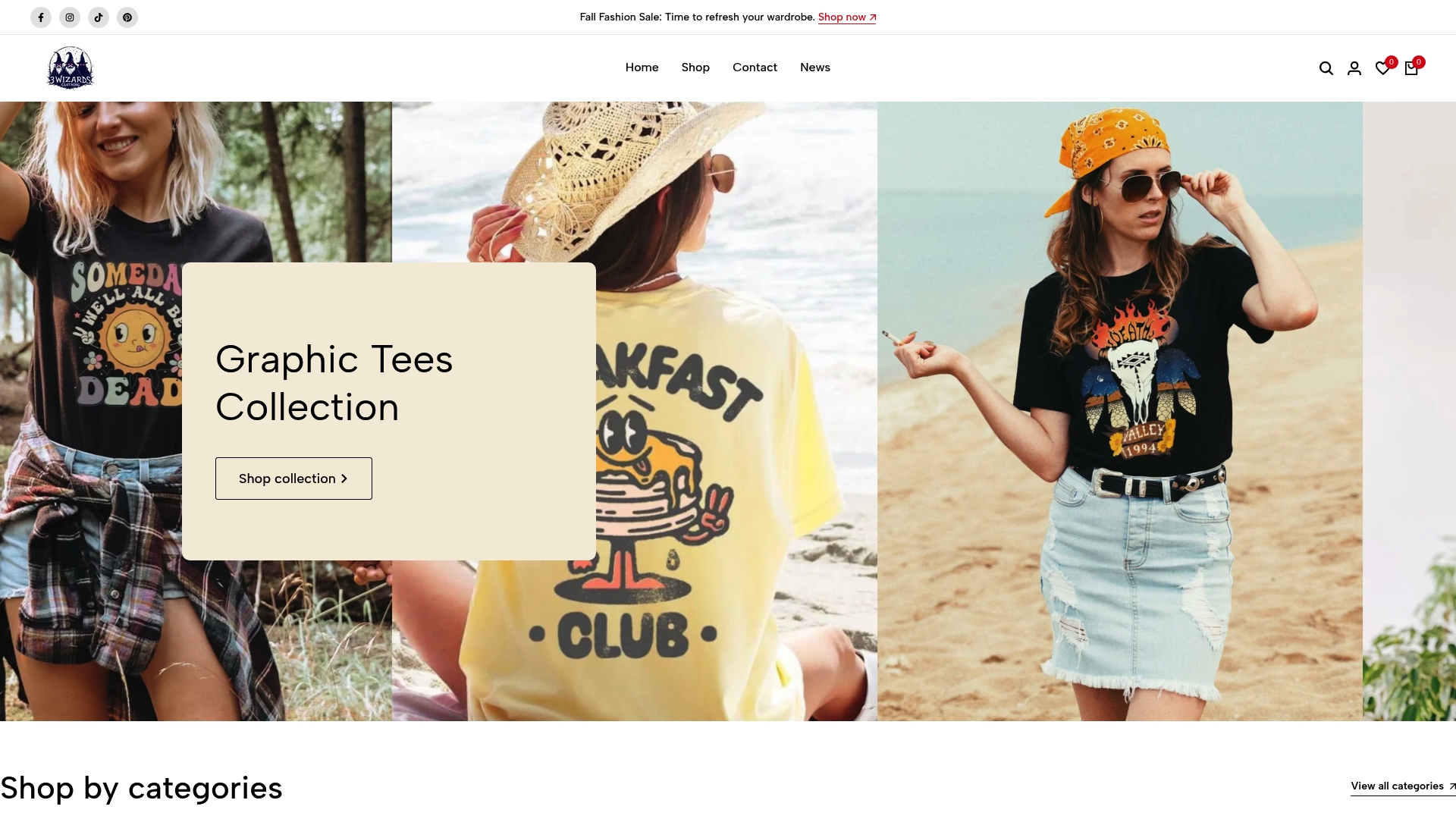
At 3 Wizard Clothing, we’ve done the research for you. Our curated collections are built around the exact niches, colors, and design principles covered in this guide. From the cozy and humorous pumpkin season t-shirt that nails the fall micro-niche to the effortlessly cool simple sneaker tee for everyday wear, our store makes it easy to find trending graphic tees for young adults and families. Browse seasonal collections, new arrivals, and bestsellers to discover your next favorite shirt without the guesswork.
Frequently asked questions
What are the most profitable t-shirt niches in 2026?
Hobbies, professions, family matching sets, and seasonal themes are the most profitable t-shirt niches, with high-demand niches identified through Google Trends and Etsy marketplace analysis showing steady, repeatable demand.
How many designs should I test before launching a t-shirt brand?
Experts recommend testing 10 to 15 designs in small batches for 30 days to track conversion rates and refine winners before scaling.
Which colors increase t-shirt sales the most?
Black, white, navy, and gray are consistently top-selling colors for t-shirts due to their strong print compatibility and broad consumer preference across niches.
What’s the biggest mistake when designing best-selling tees?
Overdesigning with cluttered graphics or unreadable fonts reduces sales significantly. Stick to bold, clear slogans with high contrast for the best conversion results.
How important is thumbnail legibility for marketplace algorithms?
Thumbnail legibility is critical because algorithmic ranking on Etsy directly rewards listings that are clear, readable, and visually compelling at small display sizes.


