

Graphic tees are wardrobe staples, but wearing them solo can feel limiting when you crave fresh, versatile looks. You want outfits that express your personality while staying comfortable and stylish throughout your day. Layering transforms your favorite graphic tees from simple basics into dynamic statement pieces that work across seasons and occasions. This guide shows you exactly how to prepare your wardrobe, master effective layering techniques, and troubleshoot common mistakes so you can confidently create polished, head-turning outfits that showcase your unique style.
Table of Contents
- What You Need Before Layering Graphic Tees
- How To Layer Graphic Tees Stylishly And Comfortably
- Tips For Mixing Colors, Textures, And Patterns In Layering
- Common Layering Mistakes And How To Fix Them
- Explore 3 Wizard Clothing’s Fall Graphic Tees For Layering
- FAQ
Key takeaways
| Point | Details |
|---|---|
| Layering expands versatility | Graphic tees become foundation pieces for countless outfit combinations when layered strategically |
| Fabric and fit matter | Choose close-fitting base layers with compatible weights to avoid bulk while maintaining comfort |
| Color harmony simplifies styling | Monochromatic palettes reduce outfit anxiety and create cohesive, polished looks |
| Texture adds visual interest | Mixing materials like mesh or stripes under graphic tees elevates basic outfits |
| Shorter over longer works best | Proper hem length balance creates flattering silhouettes and polished aesthetics |
What you need before layering graphic tees
Before diving into layering techniques, you need the right foundation pieces and understanding of key styling principles. Success starts with selecting base layers that fit close to your body without clinging uncomfortably. These pieces should move with you naturally while creating a smooth foundation for additional layers.
Your graphic tees themselves require specific characteristics for effective layering. Look for styles with appropriate sleeve lengths and hem cuts that work both alone and under other pieces. Choosing graphic tees with these features ensures maximum versatility. Pay attention to armhole sizes, as overly tight armholes create discomfort when layering, while excessively loose ones add unwanted bulk.
Layering involves considering fabric thickness, color theory, and fit to create balanced looks that feel intentional rather than thrown together. Fabric weight plays a crucial role in how layers sit together. Lightweight cotton works beautifully as a base layer, while slightly heavier knits can serve as middle or outer layers depending on your outfit goals.
Color palettes deserve careful consideration when building your layering wardrobe. Starting with monochromatic or compatible color schemes creates cohesion and makes mixing pieces effortless. You can expand into bolder color combinations once you master the basics, but neutral foundations provide the most flexibility.
Essential pieces for your layering toolkit include:
- Fitted tank tops in neutral colors for invisible base layers
- Long-sleeve tees in complementary shades for temperature versatility
- Lightweight turtlenecks or mock necks for sophisticated layering
- Graphic tees in various sleeve lengths and necklines
- Mesh or semi-sheer tops for texture variation
Pro Tip: Keep a capsule collection of five to seven base layer pieces in black, white, gray, and one accent color. This minimal selection generates dozens of outfit combinations when paired with your graphic tees, eliminating decision fatigue while maximizing style options.
How to layer graphic tees stylishly and comfortably
Mastering the art of layering graphic tees requires following proven formulas while understanding the principles behind them. Start every layered outfit with your lightest, most form-fitting piece as the foundation. This base layer should feel like a second skin, providing coverage without adding visible bulk or restricting movement.
The golden rule for hem lengths involves placing shorter layers over longer ones to create visual balance and flattering silhouettes. A longer tank top peeking beneath a graphic tee adds dimension, while a cropped outer layer over a standard-length tee creates modern, intentional styling. This hierarchy prevents the sloppy appearance of bunched fabric and creates clean lines.
Outfit formulas using tanks and long sleeves create versatile multi-layer looks without bulk when executed properly. Follow these proven combinations:
- Start with a fitted tank top as your base layer, ensuring it sits smooth against your skin
- Add your graphic tee as the middle layer, adjusting the neckline to show or hide the tank strategically
- Incorporate a lightweight long-sleeve tee underneath or a structured jacket over top
- Check that each hem falls at the intended length without riding up or bunching
- Test mobility by raising your arms overhead and sitting down to ensure comfort
- Adjust collars, cuffs, and sleeves so they complement rather than compete with each other
Texture transforms basic layering into visually compelling outfits. Incorporating materials like mesh, ribbed knits, or striped fabrics under your graphic tees adds depth without requiring bold colors or patterns. A simple mesh long-sleeve under a solid graphic tee creates subtle interest that elevates your entire look.
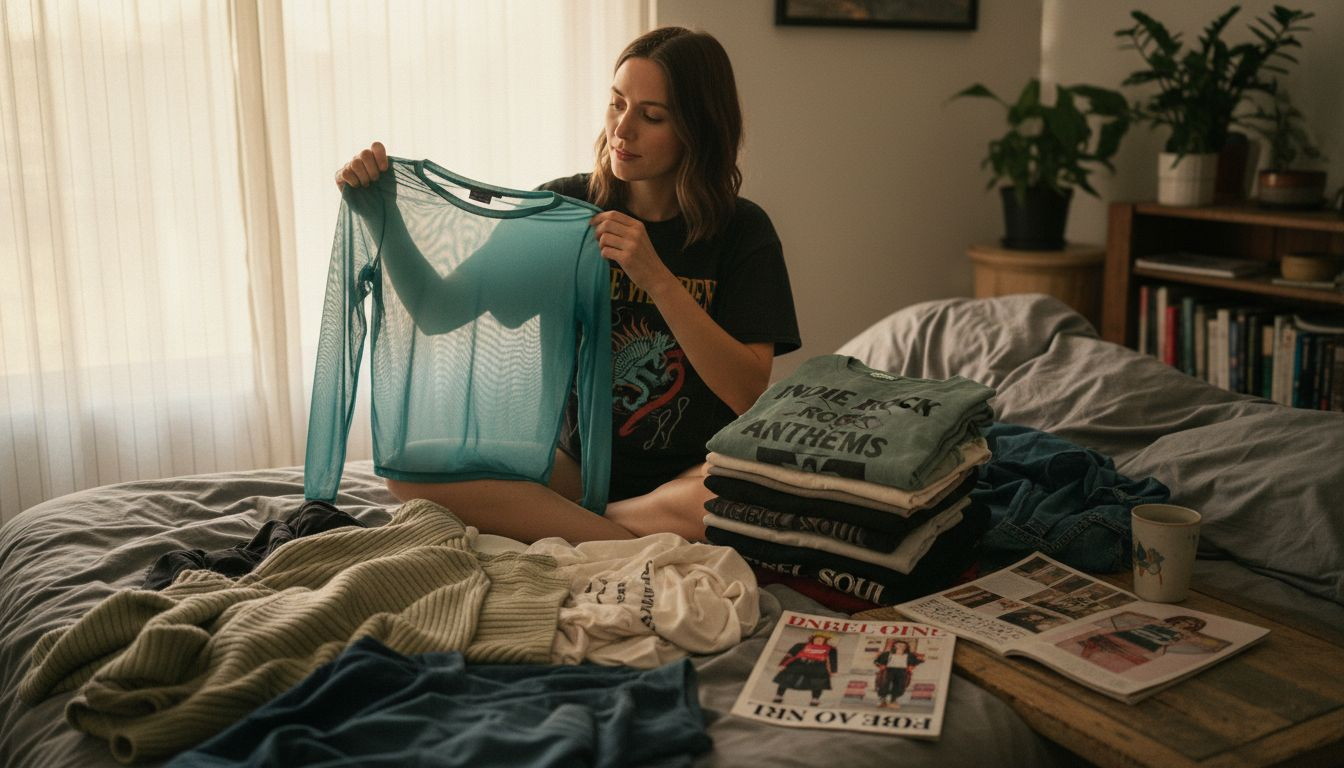
Layering with varying fabric densities maintains warmth while avoiding bulk that makes you look shapeless. Place your thinnest fabrics closest to your skin, gradually increasing thickness with each additional layer. This progression ensures comfort across temperature changes while maintaining a sleek silhouette.
Pay special attention to finishing details that separate amateur layering from polished styling. Collars should lie flat without puckering, sleeves should end at consistent points rather than bunching randomly, and cuffs should sit cleanly at your wrists. These small refinements create cohesive looks that appear effortlessly put together.
| Layer Position | Fabric Weight | Fit Guideline | Example Pieces |
|---|---|---|---|
| Base | Lightweight | Form-fitting | Fitted tanks, thin long-sleeves |
| Middle | Medium | Close but comfortable | Graphic tees, standard tees |
| Outer | Medium to heavy | Structured | Jackets, cardigans, overshirts |
Pro Tip: Create a signature layering formula that works for your body type and repeat it with different color combinations. Consistency in structure with variation in color and texture builds a recognizable personal style while simplifying daily outfit decisions.
Tips for mixing colors, textures, and patterns in layering
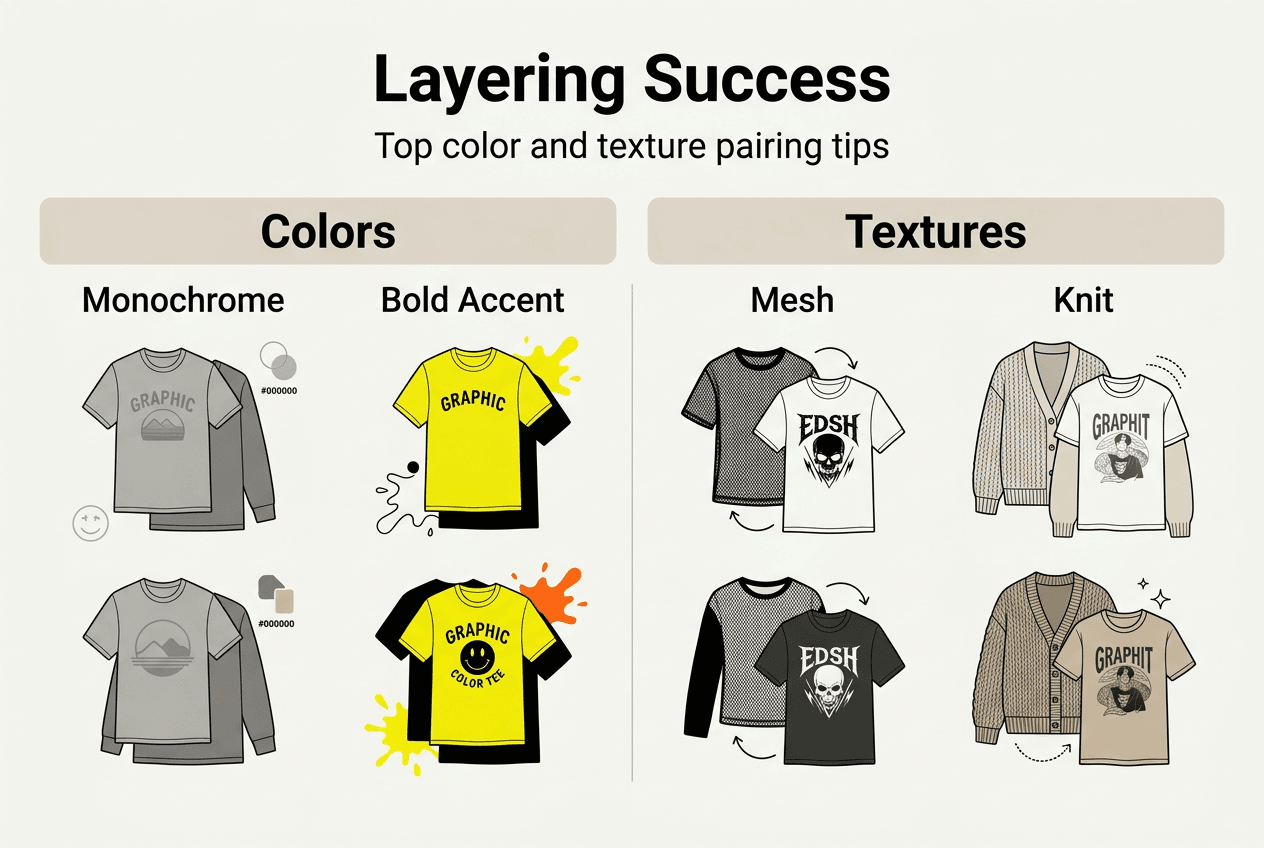
Color mixing intimidates many people, but starting with strategic approaches removes the guesswork from creating harmonious layered outfits. Color palettes are crucial; beginners should start with monochromatic schemes to reduce outfit anxiety and build confidence before experimenting with contrasting hues. Monochromatic layering uses different shades of the same color family, creating sophisticated depth without risk of clashing.
Once you master monochromatic layering, introduce complementary colors that sit opposite each other on the color wheel. A rust orange graphic tee layered over a deep teal long-sleeve creates striking contrast while maintaining visual balance. Analogous colors, which sit next to each other on the wheel, offer gentler combinations perfect for everyday wear.
Texture adds dimension that color alone cannot achieve. Mesh layering adds texture and color pops to outfits by creating visual interest through transparency and pattern variation. A mesh long-sleeve in a contrasting color beneath your graphic tee transforms a basic outfit into something editorial and intentional.
Pattern mixing requires more confidence but delivers impressive results when executed thoughtfully. Stripes work exceptionally well under graphic tees because their linear nature complements rather than competes with graphic designs. A classic striped long-sleeve under a bold graphic tee channels French-inspired casual elegance that feels both timeless and contemporary.
Balance bold patterns with solid color layers to prevent visual chaos. If your graphic tee features a busy design with multiple colors, keep your base and outer layers in solid neutrals. Conversely, a simple graphic tee can handle patterned layers underneath or over top without overwhelming the eye.
Strategic color and texture combinations:
- Black graphic tee over white mesh long-sleeve for classic contrast
- Gray graphic tee layered with charcoal and light gray pieces for tonal sophistication
- White graphic tee over navy striped long-sleeve for nautical vibes
- Olive graphic tee with tan and cream layers for earthy, relaxed styling
- Burgundy graphic tee over black turtleneck for rich, seasonal depth
Accessories offer another avenue for revealing and enhancing your layers creatively. Brooches pinned strategically can gather fabric to show underlying layers, adding vintage charm while serving a functional purpose. Rolling sleeves to different lengths on each layer creates casual, lived-in appeal that looks effortlessly cool.
“The key to successful pattern mixing is ensuring one pattern dominates while others play supporting roles. Let your graphic tee be the star, with subtle patterns in your base layers adding quiet interest rather than competing for attention.”
| Approach | Best For | Color Strategy | Texture Tips |
|---|---|---|---|
| Monochromatic | Beginners, minimalists | Same color family, varied shades | Mix matte and sheen finishes |
| Complementary | Bold statements | Opposite color wheel | Keep textures simple |
| Analogous | Everyday wear | Adjacent color wheel | Experiment freely with texture |
| Neutral base | Maximum versatility | Black, white, gray foundation | Layer any texture confidently |
Pro Tip: Photograph your successful layered outfits and save them in a digital folder. When you are rushing or feeling uninspired, these references provide instant outfit formulas you know work for your body and style preferences.
Common layering mistakes and how to fix them
Even fashion-forward individuals make predictable layering errors that undermine otherwise great outfits. The most common mistake involves piling too many thick fabrics together, creating the dreaded bulky appearance that adds visual weight and restricts movement. Improper hem lengths, bulky fabrics, and poor fit ruin layering aesthetics by creating unflattering silhouettes that look unintentional rather than styled.
The solution involves strategic fabric selection and thoughtful layer ordering. Replace one thick piece with a thinner alternative that provides similar coverage without bulk. A lightweight merino wool long-sleeve offers warmth comparable to a heavy cotton tee while sitting much flatter under your graphic tee. Always place your thickest, most structured pieces as outer layers where bulk reads as intentional rather than accidental.
Hem length mistakes create visual confusion and sloppy appearances. Longer layers should always sit beneath shorter ones, creating clean lines and intentional reveals. When your graphic tee extends below your outer layer, the outfit looks unfinished and careless. Fix this by tucking strategically or choosing pieces with appropriate length relationships from the start.
Collar, sleeve, and cuff alignment requires attention to detail that separates polished looks from messy ones. Twisted collars, bunched sleeves, or hidden cuffs signal rushed styling rather than intentional layering. Take thirty seconds before leaving home to adjust these elements, ensuring each layer sits exactly where you want it.
Movement comfort often gets overlooked until you are already out and struggling with restrictive layers. Test every layered outfit by performing normal activities: raise your arms overhead, sit down, bend forward, and walk around. Layers that shift out of place or restrict these basic movements need adjustment or replacement before you commit to wearing them all day.
The golden rule: each layer must fit well alone and slide smoothly under the next without bunching or pulling. If a piece does not fit properly by itself, adding more layers will only magnify the fit issues. Build your layering wardrobe with pieces that work independently first, then combine them strategically.
Common fixes for frequent layering problems:
- Too bulky: Remove one layer or swap a thick piece for a thinner alternative in the same color
- Hem confusion: Establish clear length hierarchy with longest pieces on bottom, shortest on top
- Restricted movement: Size up in base layers or choose stretchier fabrics that move with you
- Color clash: Return to monochromatic basics and add color gradually as confidence builds
- Sloppy appearance: Spend time adjusting collars, cuffs, and hems before finalizing your outfit
- Temperature discomfort: Layer with removable pieces so you can adjust throughout the day
Pro Tip: Keep a lint roller and small safety pins in your bag for emergency layering adjustments. A quick lint roll refreshes your outfit’s appearance, while safety pins can temporarily fix hem length issues or secure shifting layers until you get home.
Explore 3 Wizard Clothing’s fall graphic tees for layering
Now that you understand layering principles and techniques, you need graphic tees designed to work beautifully in layered outfits. 3 Wizard Clothing offers fall-themed graphic tees that serve as perfect foundation pieces for the layering strategies you have just learned.
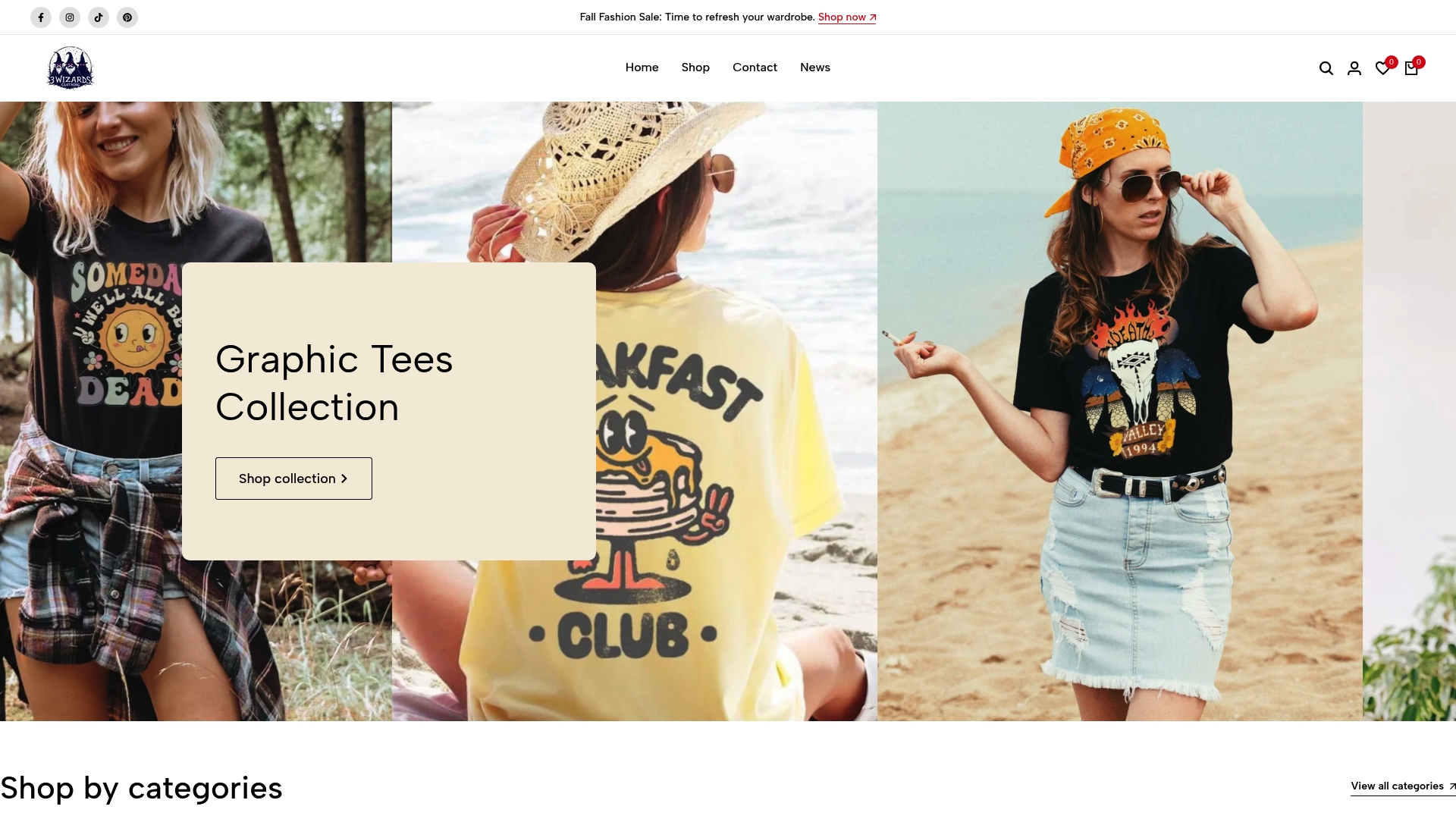
The Pumpkin Season T-Shirt features cozy autumn graphics that add seasonal charm when layered over long-sleeves or under jackets. Its versatile design works with the monochromatic earth tones perfect for fall layering formulas. The Autumn Vibes Tee brings playful seasonal elements that pair beautifully with textured base layers and structured outer pieces.
For everyday versatility beyond seasonal themes, the Keep It Simple Sneaker Tee delivers minimalist style that layers effortlessly with any color palette or texture combination. These tees fit the criteria for successful layering pieces: appropriate sleeve lengths, complementary graphics, and quality fabrics that sit smoothly under or over other layers. Explore these collections to build your layering wardrobe with pieces designed for the techniques you have mastered in this guide.
FAQ
What fabric types work best for layering graphic tees?
Lightweight cotton and breathable mesh work exceptionally well as base layers because they sit close to your skin without adding bulk. Slightly heavier cotton blends or soft knits serve perfectly as middle layers, while structured fabrics like denim or canvas make ideal outer layers. The key is varying fabric densities from thin to thick as you add layers.
How do I avoid looking bulky when layering multiple t-shirts?
Use varying fabric densities, starting with your thinnest, most form-fitting pieces closest to your skin and gradually increasing thickness with each layer. Ensure each piece fits close yet comfortable, avoiding loose or oversized thick fabrics that add unnecessary volume. Following the shorter-over-longer hem rule also prevents bulk by creating clean, intentional lines.
Can I mix patterns when layering graphic tees?
Yes, but start with subtle patterns like thin stripes and balance bold graphic prints with solid color layers to prevent visual chaos. Stripes under graphic tees create classic, French-inspired looks that feel timeless and sophisticated. Let your graphic tee be the dominant pattern while keeping base layers simple or subtly patterned.
What are some signs that a layered outfit is well put together?
Balanced hemlines with shorter layers sitting over longer ones create intentional, polished silhouettes. Comfortable movement without bunching, shifting, or restriction indicates proper fit across all layers. Visually cohesive colors and textures that complement rather than compete signal thoughtful styling and confident execution.


