

TL;DR:
- Expressive clothing serves as a personal language to communicate identity and emotions.
- Elements like color, texture, patterns, and graphics influence mood and social connections.
- Authenticity and personal meaning are more important than following fleeting fashion trends.
Most people think fashion is about keeping up with the latest looks. But clothing has always been something deeper. Expressive clothing refers to apparel that serves as a medium for personal self-expression, letting wearers communicate identity, emotions, personality, and values through color, texture, patterns, silhouettes, and graphics. That is a very different goal than just buying whatever is trending this season. This guide breaks down what expressive clothing really means, how it works on a psychological level, and how you can use it to say something real about who you are.
Table of Contents
- Defining expressive clothing: Beyond the basics
- The building blocks of self-expression in fashion
- How expressive clothing affects mood, confidence, and social connection
- Expressive clothing in real life: Trends, humor, and DIY creativity
- A new angle on expressive clothing: Why authenticity matters more than trends
- Find your expressive look with 3 Wizard Clothing
- Frequently asked questions
Key Takeaways
| Point | Details |
|---|---|
| Personal expression matters | Expressive clothing lets you showcase your identity and values far beyond following fleeting trends. |
| Style impacts mood | The right clothing choices can boost your confidence and influence how you feel and act. |
| Everyone can participate | Whether DIY or store-bought, expressive outfits are accessible to all ages and occasions. |
| Humor and creativity connect | Funny, seasonal, or custom graphics in clothing can help foster community and make self-expression fun. |
Defining expressive clothing: Beyond the basics
Expressive clothing is not a style category. It is a purpose. Any piece of clothing can be expressive if it communicates something meaningful about the person wearing it. A vintage band tee, a hoodie with a bold graphic, a Halloween shirt that makes your whole neighborhood laugh — all of these qualify. What sets expressive clothing apart from fast fashion is intention. Fast fashion is about volume and speed. Expressive clothing is about meaning.
“Expressive clothing refers to apparel that serves as a medium for personal self-expression, allowing wearers to communicate identity, emotions, personality, and values through elements like color, texture, patterns, silhouettes, and graphics.”
That distinction matters. When you shop for something trendy just because it is everywhere, you are borrowing someone else’s identity. When you choose a piece because it reflects your sense of humor, your values, or your crew, you are doing something entirely different. You are using clothing as a language.
Understanding how t-shirt designs convey personality helps explain why graphic apparel is so popular with young adults and families. A single image or phrase on a shirt can say more about you in five seconds than a whole conversation.
Here are the core elements that make clothing expressive:
- Color: Signals mood, energy, and personality at a glance
- Texture: Communicates comfort level, formality, and attitude
- Patterns and prints: Bold prints suggest confidence; subtle patterns suggest restraint
- Graphics and text: Direct communication of humor, values, or identity
- Silhouette: The shape of a garment signals how you want to be perceived
- Accessories: Layered meaning added through jewelry, hats, and bags
Expressive clothing also shows up differently across groups. For families, matching graphic tees for a holiday or a funny seasonal design creates shared identity. For young adults, funny clothing for standout self-expression is one of the most accessible ways to be noticed without saying a word.
The building blocks of self-expression in fashion
Now that you know what expressive clothing is, it helps to understand the mechanics behind it. Think of each element of an outfit as a dial you can turn up or down depending on the message you want to send.
Color psychology in fashion is well documented: warm tones like red and orange signal energy and boldness, while cool tones like blue and green suggest calm and approachability. Textures work the same way. A soft, oversized hoodie says “I am relaxed and approachable.” A structured blazer says “I mean business.” Patterns and prints communicate personality without words. Bold, clashing patterns signal an outgoing, fearless personality. Minimalist designs suggest precision and control.
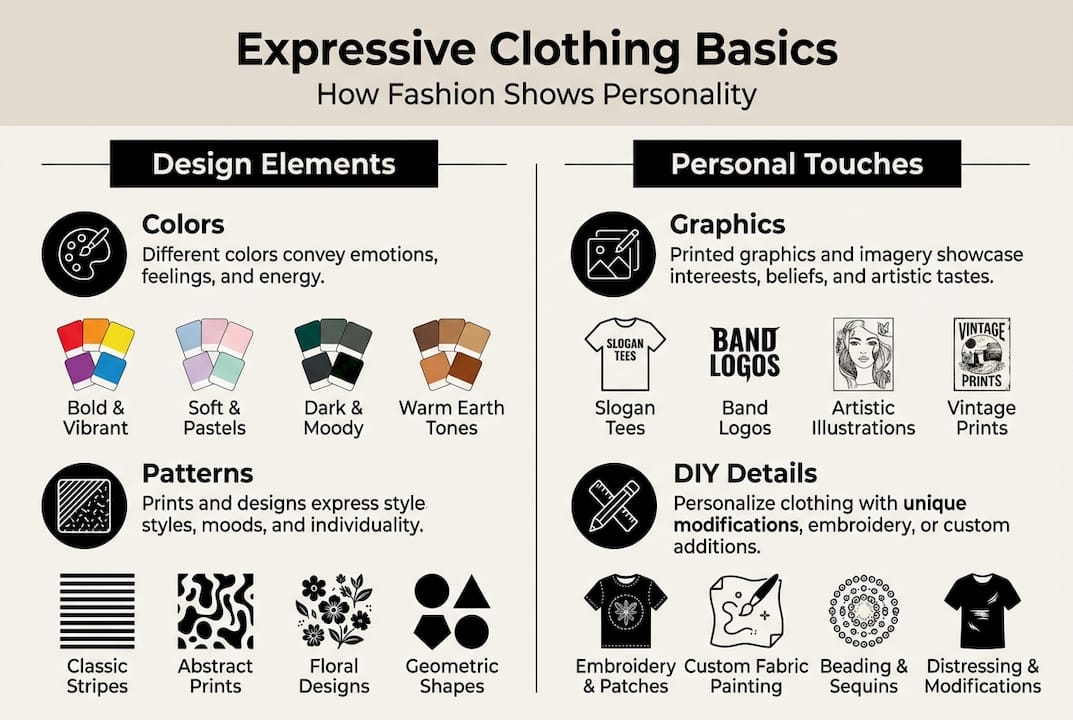
Here is a quick breakdown of what common elements communicate:
| Element | What it communicates |
|---|---|
| Warm colors (red, orange) | Energy, confidence, boldness |
| Cool colors (blue, green) | Calm, reliability, creativity |
| Oversized silhouette | Relaxed, casual, approachable |
| Fitted silhouette | Professional, intentional, polished |
| Bold graphic print | Humor, personality, group identity |
| Subtle texture | Sophistication, understated style |
Building an expressive outfit does not have to be complicated. Here is a simple process:
- Start with a statement piece (a graphic tee, a printed hoodie, or a bold color)
- Choose bottoms and shoes that let the statement piece lead
- Add one accessory that reinforces your theme or mood
- Check the overall silhouette — does it feel like you?
- Ask yourself: does this outfit say something I actually want to say?
The impact of t-shirt design on first impressions is real. People form opinions fast, and a well-chosen graphic tee can immediately signal your sense of humor, your interests, or your tribe. Browsing types of expressive graphic apparel is a great way to see how many options exist across styles and occasions.
Pro Tip: If you are new to expressive dressing, start with one humorous or themed graphic piece and build a simple outfit around it. Let the design do the talking while the rest of your look stays clean and easy.
How expressive clothing affects mood, confidence, and social connection
This is where things get genuinely interesting. Clothing does not just reflect how you feel — it actively shapes it. Fashion psychology and the concept of enclothed cognition show that clothing impacts mood, self-esteem, and behavior, with a 2012 study finding a systematic influence of clothes on psychological processes. In other words, what you wear changes how you think and act.
For young adults and families, this is especially relevant. Wearing a shirt that makes you feel like yourself — whether that is a nerdy reference, a Halloween graphic, or a funny slogan — creates a small but real boost in confidence. It is not vanity. It is alignment between your inner identity and your outer presentation.
“Fashion is not just about aesthetics. It is a form of emotional regulation and social signaling that operates below the level of conscious thought.”
Expressive clothing also builds social bonds. When someone spots your graphic tee and laughs or points at it because they get the reference, that is an instant connection. Wearing nerdy clothing for confidence taps into exactly this dynamic. Shared humor or shared aesthetics create belonging.
Here is how expressive clothing affects people across different contexts:
- Individuals: Boosts mood, reinforces identity, reduces social anxiety
- Families: Creates shared visual identity and strengthens group bonds
- Young adults: Signals tribe membership and opens conversations
- Kids: Builds early confidence through self-chosen style
Research on why families choose graphic tees points to both comfort and the joy of shared expression. And kids’ preference for humorous styles shows that even young children use clothing to assert identity and feel seen. The psychological benefits start early and stick around.
Expressive clothing in real life: Trends, humor, and DIY creativity
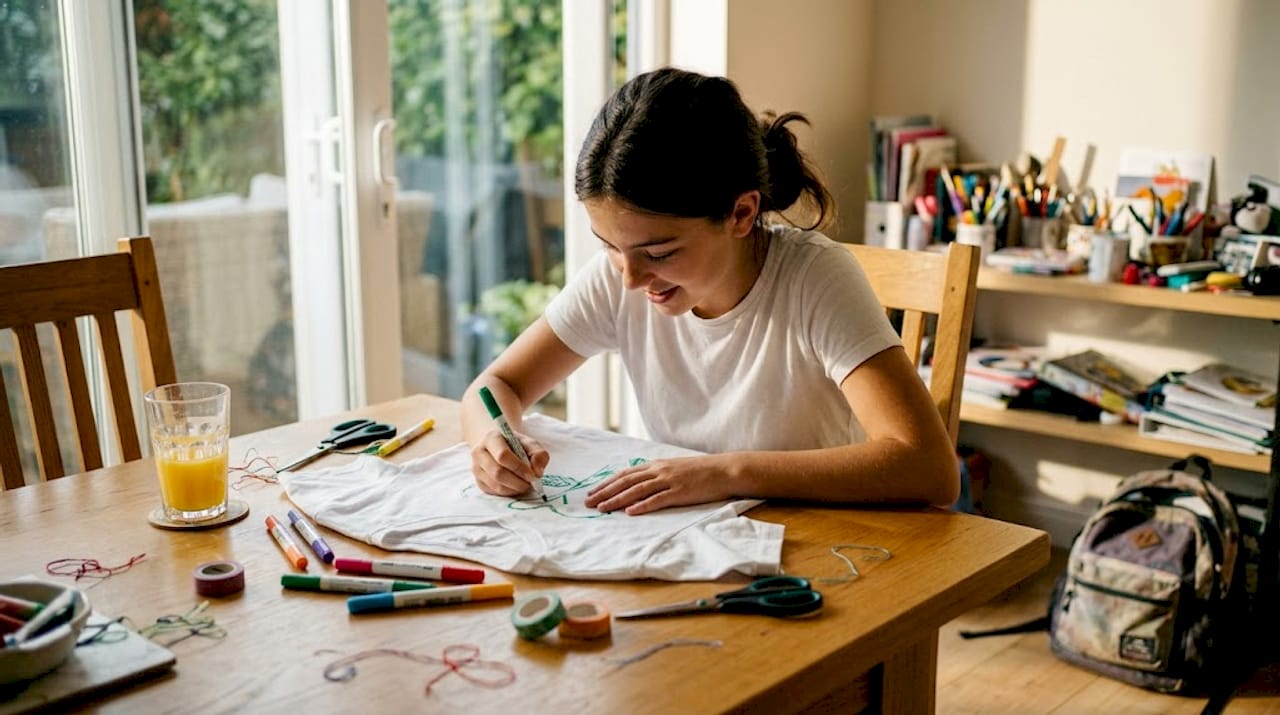
Expressive clothing shows up in two main forms: store-bought graphic apparel and custom or DIY pieces. Both are valid. Both serve different needs.
Store-bought graphic apparel, like a bold Halloween tee or a fall-themed hoodie, gives you access to professionally designed, trend-aware pieces that still feel personal. Seasonal fashion trends and humor show how much variety exists throughout the year, from spooky October drops to cozy winter graphics. These pieces let you participate in a cultural moment while still choosing something that fits your personality.
DIY expressive clothing is a different animal. Hobbyist-sewers and crafters create custom pieces specifically to communicate ideas or opinions that mass-produced clothing cannot capture. This is clothing as pure personal statement.
Here is a comparison of the two approaches:
| Type | Best for | Key advantage |
|---|---|---|
| Store-bought graphic apparel | Seasonal occasions, humor, group wear | Professionally designed, easy to find |
| Custom or DIY pieces | Unique personal messages, niche interests | Completely one-of-a-kind |
If you want to try creating your own expressive piece, here is a simple starting process:
- Pick a theme or message that matters to you
- Choose a blank garment (tee, hoodie, or tank) in a color that fits your mood
- Sketch or source a graphic or phrase that captures your idea
- Use iron-on transfers, fabric paint, or embroidery to apply your design
- Wear it somewhere you will get honest reactions
For families, creative Halloween apparel ideas are a great seasonal entry point. Matching family sets or coordinated graphic tees make the occasion more memorable without requiring a full costume. And for kids, trendy kids’ graphic apparel gives younger family members a chance to participate in the fun with age-appropriate designs.
Pro Tip: When picking a humorous graphic for a group or family occasion, choose a design with a universal reference. Inside jokes work great for close groups, but a broadly funny image lands better when you want to connect with a wider crowd.
A new angle on expressive clothing: Why authenticity matters more than trends
Here is something most fashion content will not tell you: chasing expressive clothing trends is still just chasing trends. If you are buying the graphic tee that everyone else is wearing because it is everywhere right now, you are not expressing yourself. You are expressing the algorithm.
Real self-expression sometimes means wearing something that feels slightly out of step with what is popular. It means choosing the design that makes you laugh, not the one with the most likes. Families and young adults who build wardrobes around what genuinely resonates with them, rather than what is trending, tend to feel more confident in what they wear. The clothes feel like theirs.
There is also a counterintuitive social benefit to looking a little different. When you wear something unexpected, you become more memorable. You give people something real to respond to. Rethinking seasonal trends does not mean ignoring them entirely. It means using them as a starting point rather than a destination. The best expressive outfits borrow from trends and then add something personal that makes the look unmistakably yours.
Find your expressive look with 3 Wizard Clothing
You now know what expressive clothing is, how it works, and why it matters. The next step is finding pieces that actually feel like you.
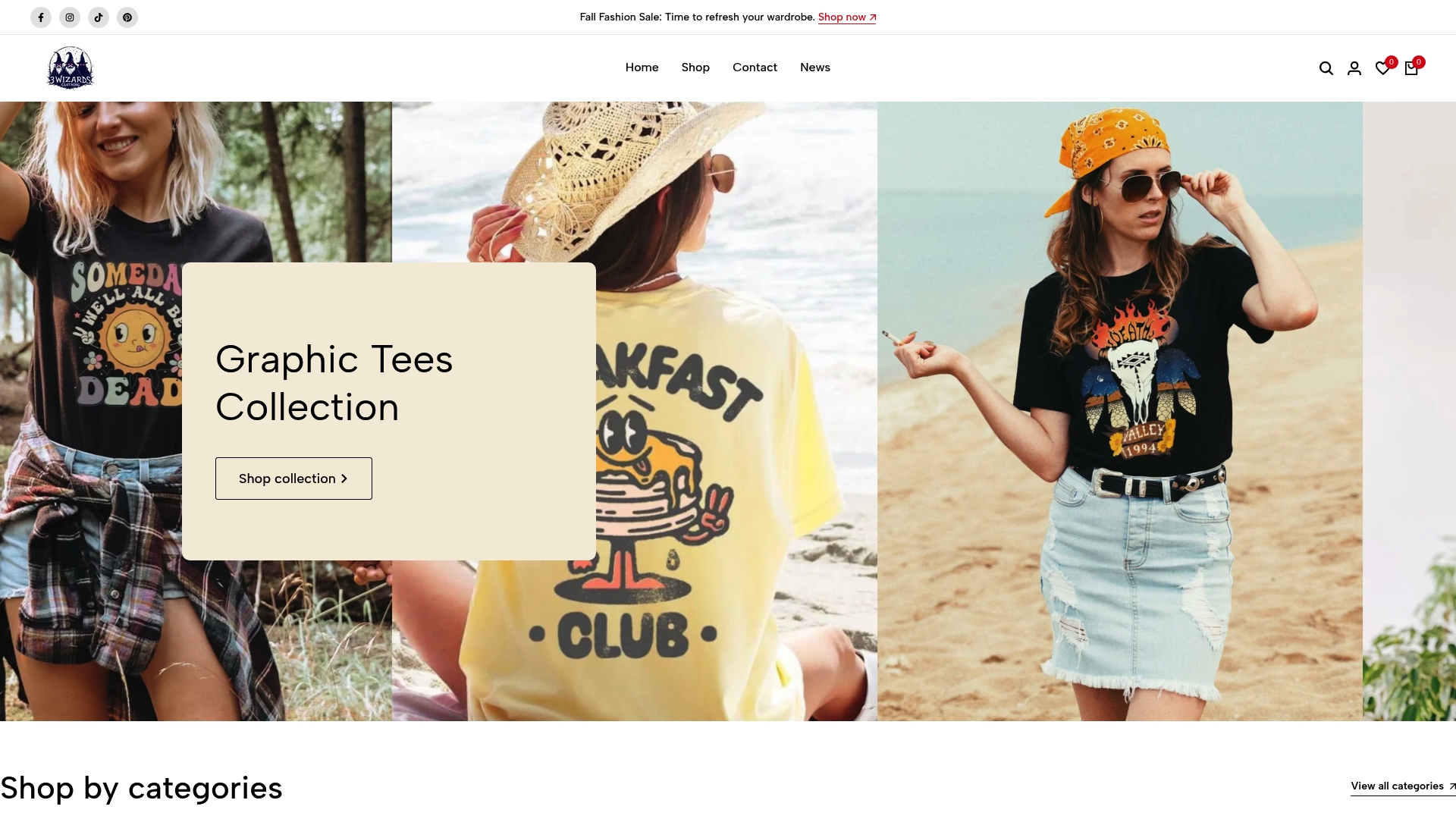
At 3 Wizard Clothing, we carry graphic apparel designed for people who want to wear something with personality. Whether you are looking for a cozy fall staple like the Pumpkin Season T-Shirt, a laid-back everyday piece like the Keep It Simple Sneaker Tee, or something for the whole family, we have options that make getting dressed feel intentional. Explore more expressive apparel at 3 Wizard Clothing and find the pieces that say exactly what you want to say.
Frequently asked questions
What qualifies as expressive clothing?
Expressive clothing uses color, patterns, graphics, and styling to showcase your personality, values, and mood rather than just following trends. Any garment worn with intention and personal meaning fits the definition.
How does expressive clothing impact mood and confidence?
Enclothed cognition research shows that wearing expressive clothing can boost your mood and self-esteem, helping you feel more authentic and connected to your own identity.
Can expressive clothing be both funny and stylish?
Absolutely. Humorous and trendy graphics can make expressive outfits that are fun and fashionable for families and young adults, especially for seasonal occasions where shared humor creates real connection.
What is the difference between DIY expressive clothing and store-bought graphic apparel?
DIY expressive clothing is custom-made for unique personal messages, while store-bought options reflect popular trends or humor with wide appeal, making them easier to find and wear right away.
Recommended
- Why wear nerdy clothing? Boost expression & belonging – 3 Wizard Clothing
- Why Wear Graphic Tees: Expression Meets Fashion – 3 Wizard Clothing
- Top funny clothing styles for standout self-expression – 3 Wizard Clothing
- Why shop themed t-shirts: express personality celebrate – 3 Wizard Clothing
- 7 Creative DTF Design Ideas for Apparel Success – Transfer Kingz


