

TL;DR:
- Men’s and women’s tees differ significantly in cut, fit, and graphic placement due to body shape distinctions. Unisex shirts are based on men’s sizing, often requiring women to size down for a closer fit, with measurement and style considerations essential. Understanding these structural differences ensures better fit, appearance, and longevity when shopping for graphic tees.
You probably already know men’s and women’s tees aren’t identical. But most people underestimate just how different they actually are. The difference between men’s and women’s tees goes well beyond slapping a smaller label on the same shirt. We’re talking about structural design choices rooted in body shape, graphic placement that shifts based on cut, and sizing systems that don’t translate the way you’d expect. Whether you’re shopping for yourself, ordering for a group, or just trying to get the right fit from a graphic tee, understanding these distinctions will save you from a lot of frustrating returns.
Table of Contents
- Key Takeaways
- The structural difference between men’s and women’s tees
- How sizing actually works and where people go wrong
- Style trends and what they mean for graphic tees
- Quality markers and care that actually extend tee life
- Putting it all together when you shop
- My take on a misunderstood topic
- Fall into the right fit at 3wizardclothing
- FAQ
Key Takeaways
| Point | Details |
|---|---|
| Structural cuts differ significantly | Men’s tees are boxy and straight; women’s tees taper at the waist and flare at the hips. |
| Sizing doesn’t convert directly | A women’s XL and a men’s XL are not the same garment. Measure flat before buying. |
| Unisex means men’s, usually | Unisex tees are based on men’s blocks. Most women size down one or two sizes for a better fit. |
| Graphic placement changes by cut | Print positioning on women’s tees needs to shift because the printable area is shorter and narrower. |
| Care habits protect fit and print | Washing inside-out in cold water and air drying extends the life of graphic tees for both styles. |
The structural difference between men’s and women’s tees
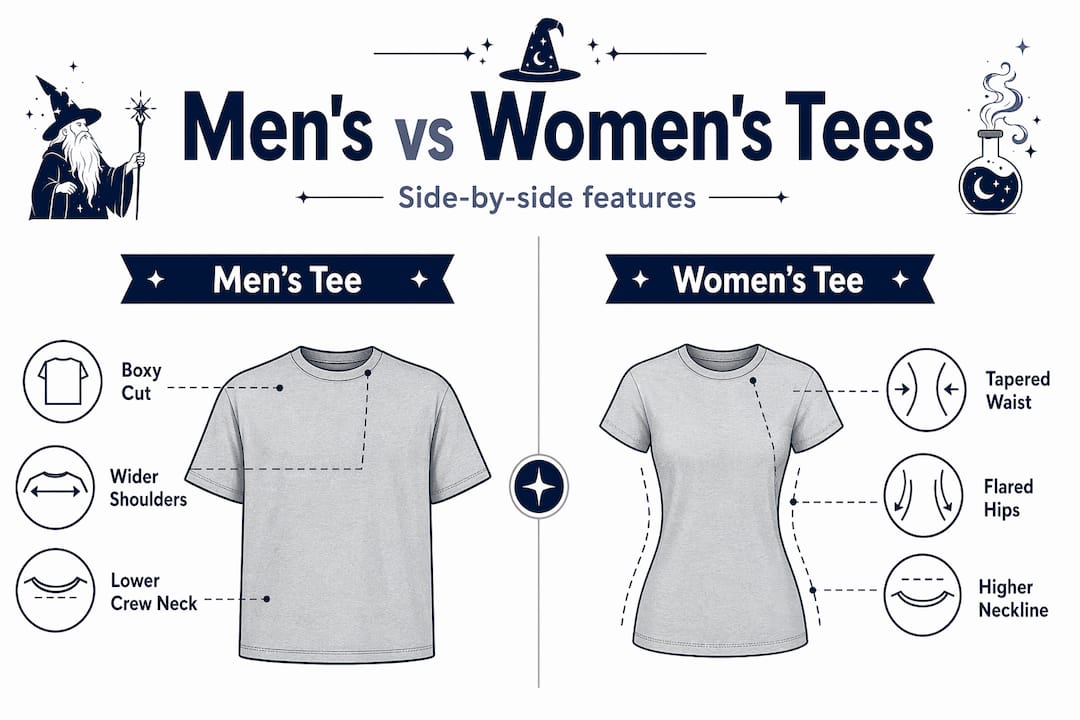
The most fundamental distinction starts with the body they’re built around. Men’s tees have a straighter, boxier silhouette with wider shoulders and a longer body length. Women’s tees, by contrast, are engineered with a narrower shoulder width, a tapered waist, and a shorter body length overall. Across most major brands, a women’s small runs about 2 to 3 inches shorter in body length than a men’s small.
That difference sounds minor until you think about what it means for a graphic tee. A centered chest print on a men’s shirt sits in a different visual zone entirely compared to the same design on a women’s cut. Print placement must be adjusted on women’s tees because the printable area is both narrower and shorter, meaning the graphic either needs to scale down or shift higher to land correctly.
Here’s a quick comparison of the core structural differences:
| Feature | Men’s tee | Women’s tee |
|---|---|---|
| Silhouette | Straight, boxy | Tapered waist, flared hips |
| Shoulder width | Wider | Narrower |
| Body length | Longer | 2 to 3 inches shorter |
| Side seams | Tubular or straight | Side-seamed, contoured |
| Neckline | Wider, sits lower | Higher, closer to collarbone |
| Sleeves | Longer, wider | Shorter, narrower |
The neckline difference alone changes how a shirt wears. Women’s crew necks sit higher and closer to the collarbone, while men’s sit wider and lower on the chest. For graphic tees specifically, this changes the visual framing of a design and influences which neckline works best with a given print or style.
Another structural detail worth noting: women’s tees often flare slightly at the hips with tapered waists, while men’s drop straight from chest to hem. That drape difference is visible in the mirror immediately, and it has nothing to do with the size you pick.
How sizing actually works and where people go wrong
Sizing is where most people run into trouble, especially with graphic tees sold as unisex. Here’s the core issue: unisex tees are based on men’s or neutral blocks, meaning they run larger and boxier by default. They also have broader shoulders, longer sleeves, and a higher crew neckline compared to women’s fitted styles.
The numbers back this up. In real-world sizing tests, 62% of women sized down one size when buying unisex tees to get their preferred fit. That means if you’re a women’s medium in a standard women’s cut, you’d likely grab a small in a unisex style for a similar silhouette.
Follow these steps to size smarter before you buy:
- Measure a shirt you already love. Lay it flat and measure chest width, body length, and shoulder width. These flat measurements beat any label.
- Check the brand’s size chart for that specific cut. Men’s, women’s, and unisex size charts are almost never interchangeable within the same brand.
- Decide on your intended fit first. If you want a fitted look in a unisex tee, size down one. If you want an oversized, relaxed look, stay true to size or size up.
- Pay attention to shoulder seams. If the shoulder seam hangs past your actual shoulder, the shirt is too large, regardless of how the chest or body feels.
- Read reviews from people with your body type. Other buyers will often mention whether a specific cut runs narrow in the shoulders, long in the body, or short in the sleeves.
Pro Tip: If you’re a woman ordering from a unisex or men’s graphic tee collection, start by sizing down one full size. If the chest feels tight but the body length works, go back up and accept the looser fit or look for a women’s cut version of the same design.
Check out the 3wizardclothing sizing guide for brand-specific measurements to narrow down your choice before adding anything to your cart.
Style trends and what they mean for graphic tees
Understanding gender differences in t-shirt styles isn’t just about fit. It’s about how you want the shirt to look when you wear it.
Men’s tees favor the relaxed, straight silhouette. That boxy cut works well with jeans, shorts, or layered under an open flannel. The longer body and wider shoulders give the shirt a casual weight that sits naturally on most builds without being clingy. For graphic designs, this format means more printable real estate, which is why you tend to see larger, bolder graphics on men’s tees.
Women’s tees offer more silhouette variety. A fitted women’s cut brings a contoured look that emphasizes the waist and works well for casual outfits where you want the shirt to feel put-together. For fashion-conscious shoppers, this distinction matters when you’re comparing men’s vs women’s t-shirts for the same graphic design. The same print can look completely different depending on whether it sits on a straight body or a tapered one.
That said, plenty of women intentionally buy men’s cuts for the oversized look. It’s a real trend, and it makes total sense. A men’s large on a women’s medium creates that lived-in, relaxed fit that’s been everywhere in streetwear and casual fashion for years. The key is knowing you’re choosing it deliberately, not just ordering the wrong size.
Pro Tip: When layering a graphic tee under an unbuttoned overshirt or jacket, a boxier men’s cut often works better than a fitted women’s cut because the straighter hem sits cleanly without bunching or pulling.
Sleeve length and neckline shape also shape your overall look. Shorter sleeves on women’s tees tend to sit higher on the arm, giving a neater, more tailored appearance. A wider men’s neckline can look more casual and relaxed. Neither is better universally. It comes down to the outfit and the graphic you’re working with.
Curious how graphic design choices interact with cut and gender fit? The role of t-shirt graphic design in self-expression is worth understanding before you finalize any order.
Quality markers and care that actually extend tee life
A well-made tee, whether men’s or women’s cut, shares some common construction features worth looking for. Shoulder-to-shoulder taping stabilizes the neckline so it doesn’t lose shape after multiple washes. Double-needle stitching along the hem adds durability and keeps the bottom edge from unraveling after hard use. Side seams on women’s tees help maintain the tapered silhouette over time. Tubular cuts used in many men’s tees have no side seams, which can cause the shirt to twist and distort after washing.
Caring for your tees the right way makes a real difference, especially for graphic prints. Shrinkage on 100% cotton garments can reach 3 to 5% without proper care. That doesn’t sound dramatic until your perfectly fitted women’s tee becomes a crop top after one hot wash.
Follow these care habits to protect both the fit and the print:
- Wash inside-out in cold water to protect the graphic and reduce friction on the print surface.
- Air dry instead of machine drying whenever possible. Heat is the primary cause of both shrinkage and print cracking.
- Fold tees flat instead of hanging them. Hanging stretches the neckline over time, especially on women’s cuts with narrower, higher collars.
- Avoid wringing out tees aggressively. Lay them flat or hang briefly to drip dry after removing from the wash.
These habits apply to both men’s and women’s tees, but they matter slightly more for women’s fitted styles because any shrinkage disrupts the contoured shape far more noticeably than it would on a boxy men’s cut.
Putting it all together when you shop
Knowing the theory is useful. Knowing how to apply it when you’re actually ordering is what saves you time and money. Here’s a practical sequence for making better decisions when comparing men’s and women’s tees:
- Define your fit goal before looking at labels. Do you want the shirt to fit your body closely, or do you want it oversized? That answer determines whether a women’s cut or a men’s/unisex cut serves you better.
- Use flat measurements, not label sizes. Lay a shirt you love flat and measure chest width and body length. Compare those numbers to the brand’s size chart, not to generic size equivalents.
- Check graphic placement before ordering. If the design placement matters to you, look for product photos that show the shirt on a model with a similar build. A graphic that looks centered on a men’s large will sit differently on a women’s small.
- For group or matching orders, account for cut differences. If you’re ordering matching shirts in both men’s and women’s cuts, confirm the print placement has been adjusted per cut. A good clothing comparison guide can help you evaluate what fits across different body types.
- Size down in unisex tees if you want a fitted women’s look. This is the single most common mistake in unisex graphic tee orders. Default to one size smaller than your women’s label size as a starting point.
My take on a misunderstood topic
I’ve noticed that most people shopping for graphic tees treat the men’s versus women’s cut question like it’s just a sizing issue. Grab the right number, done. What I’ve found is that this mindset leads to far more returns than necessary and a lot of frustration with shirts that technically fit but look wrong on the body.
The more useful framework, in my experience, is to think about cut first and size second. A women’s medium in a fitted cut and a women’s medium in an oversized unisex cut are not interchangeable. The cut determines the silhouette, and the silhouette determines how the graphic reads on the shirt.
What I’ve also seen is that the unisex trend has made people think gendered cuts are less relevant than they used to be. That’s partly true in terms of social norms, but physically, the shirts are still engineered differently. Ignoring that means you’re guessing. I’d rather you understand the actual difference so you can make an intentional choice, whether that’s a fitted women’s cut that shows off a design, or a deliberately oversized men’s cut that gives you that relaxed, casual feel.
Experiment freely. Just experiment with the knowledge of what each cut actually does to a garment.
— Josh
Fall into the right fit at 3wizardclothing
Finding the right graphic tee gets a whole lot easier when the retailer has already done the work of offering both men’s and women’s cuts with thoughtful design choices.
At 3wizardclothing, you’ll find graphic tees built for real wear across both men’s and women’s styles, including seasonal favorites like the Pumpkin Season T-Shirt, a cozy fall graphic tee featuring autumn sweaters, latte, and harvest icons. It’s the kind of design that looks great in both a fitted women’s cut and a relaxed men’s silhouette. Browse the full collection, check the available size guides, and shop with the confidence that comes from knowing exactly what fit you’re after.
FAQ
What is the main difference between men’s and women’s tees?
Men’s tees are cut with a straight, boxy silhouette and wider shoulders, while women’s tees taper at the waist with narrower shoulders and a shorter body length. These structural differences affect how the shirt fits, drapes, and how graphics appear on the finished garment.
Can women wear men’s graphic tees?
Yes, and many do intentionally for an oversized look. Women typically size down one to two sizes in men’s or unisex tees to get closer to their preferred fit, though the shoulder width and body length will still differ from a women’s cut.
How do unisex tees differ from women’s tees?
Unisex tees are based on men’s or neutral sizing blocks, meaning they have broader shoulders, longer sleeves, and a boxier cut than women’s tees. Most women size down one size in unisex styles to get a similar fit to their standard women’s cut.
Does graphic placement change between men’s and women’s tees?
Yes. Because women’s tees have a shorter and narrower printable area, graphics must be repositioned and sometimes scaled down compared to men’s cuts. A design placed at the same coordinates on both cuts will look noticeably different when worn.
How should I care for graphic tees to keep the print looking sharp?
Wash graphic tees inside-out in cold water and air dry them flat to prevent shrinkage and print cracking. Avoid machine drying on high heat, and fold rather than hang tees to protect the neckline shape over time.


