

TL;DR:
- A seasonal wardrobe involves rotating roughly 60% of your clothes each season to maintain weather-appropriate and organized clothing. This system reduces clutter, decision fatigue, and extends garment lifespan by storing off-season items properly. Implementing simple labeling, cleaning, and storage methods can transform your mornings and improve your wardrobe management.
Most people open their closet and feel overwhelmed before they’ve had their first cup of coffee. Clothes are packed in tight, seasons are mixed together, and nothing feels wearable even when there’s plenty of it. Understanding what is a seasonal wardrobe is the first step to fixing that chaos. A seasonal wardrobe is a rotation system where you keep only weather-appropriate clothing accessible at any given time. For young adults juggling work, social life, and tight budgets — and for families managing multiple people’s clothing — this approach can transform your mornings and your mental clarity.
Table of Contents
- Key Takeaways
- What a seasonal wardrobe actually means
- How to organize and rotate your seasonal clothes
- The real benefits and honest challenges
- Building a seasonal wardrobe for young adults and families
- My take: what seasonal wardrobe rotation actually changed for me
- Refresh your seasonal wardrobe with 3wizardclothing
- FAQ
Key Takeaways
| Point | Details |
|---|---|
| Seasonal rotation defined | A seasonal wardrobe cycles roughly 60% of your clothes each season, keeping only what fits the current weather accessible. |
| Smart storage matters | Use vacuum bags for bulky items and breathable garment bags for structured or delicate pieces to protect your investment. |
| Label for fast retrieval | Organize bins by category and season (like “Coats W”) so you can find exactly what you need without unpacking everything. |
| Benefits go beyond space | Seasonal rotation reduces decision fatigue, extends garment life, and encourages more mindful, intentional shopping habits. |
| Adapt to your life | Tailor rotation frequency to your climate, family size, and routine rather than following a rigid calendar schedule. |
What a seasonal wardrobe actually means
A seasonal wardrobe is not about owning fewer clothes. It’s about having the right clothes within reach at the right time. The concept centers on rotating your clothing based on the current season. You store what you don’t need and make space for what you do. According to one widely cited benchmark, a seasonal wardrobe rotates roughly 60% of your clothes each season, with the active wardrobe typically holding 25 to 40 versatile pieces that can generate 30 or more outfit combinations.
This philosophy draws directly from the capsule wardrobe movement. That concept was pioneered by Susie Faux in London during the 1970s and later popularized in the U.S. by Donna Karan. The core idea was simple: build a small, high-quality core wardrobe that works across any situation. Seasonal wardrobes take that philosophy and apply a practical rotation layer on top of it.
The immediate, visible benefit is space. When rotating 60% of your wardrobe seasonally, you can free up to 12 cubic feet of space in a standard reach-in closet. That’s not a small difference. That’s the difference between a closet that works and one that fights you every morning. For families, this benefit multiplies across every member’s closet.
Here’s what a basic seasonal wardrobe includes for each active season:
- Core tops: T-shirts, long-sleeve shirts, or layering pieces appropriate for current temperatures
- Bottoms: Pants, shorts, or skirts matched to the season
- Outerwear: One light jacket for transitional weather plus any heavier coat for winter
- Footwear: Two to three pairs covering casual, dressy, and athletic needs
- Accessories: Seasonal scarves, hats, or sunglasses that complete outfits without taking up much space
How to organize and rotate your seasonal clothes
Execution is where most people stall. They understand the idea but aren’t sure how often to rotate or how to store things properly. The good news is that performing seasonal rotations twice a year works for most people, with an option to go four times a year if your climate shifts dramatically each quarter. With a checklist and a labeled storage system, each rotation takes only 30 to 60 minutes.
Here’s a straightforward process to follow:
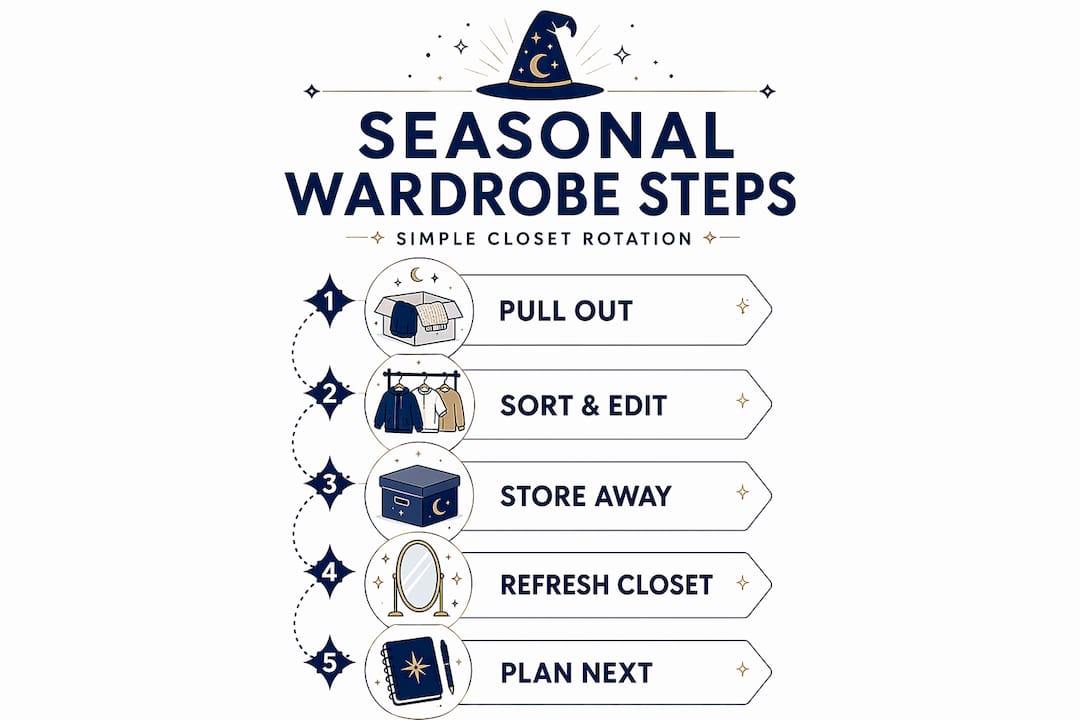
- Set your rotation dates. Pick two reliable points in the year, typically spring and fall. Mark them on your calendar. If you live somewhere with four distinct seasons, plan for four smaller swaps.
- Sort everything out first. Pull all off-season clothing from your active closet. Lay it flat on your bed so you can see every piece before making decisions.
- Decide what stays, gets donated, or gets stored. If you didn’t wear it last season, ask yourself honestly whether you will next year. If the answer is no, remove it now.
- Clean before you store. This step matters more than most people realize. Laundering all garments before storage prevents permanent stains from setting and protects against pest infestation. Even clothes that “look clean” can have body oils or food residue that attracts bugs over months of storage.
- Choose your storage method wisely. Vacuum storage bags compress bulky items like sweaters and winter coats by up to 80%, which is great for saving space. But never use them for structured jackets, blazers, or delicate knits. Those need breathable garment bags or acid-free tissue paper to keep their shape.
- Label everything with category plus season. Label storage bins as “Coats (W)” or “Tops (S)” rather than just “Winter” or “Summer.” That specificity saves real time when you need to grab one item without disturbing everything else.
Pro Tip: Take a quick photo of what’s inside each bin before you seal it. Store the photo in a phone album labeled by season. You’ll always know exactly where something is without opening every container.
The real benefits and honest challenges
The importance of seasonal wardrobe organization goes well beyond having a tidy closet. The benefits stack up across three areas: your mental state, your garments, and your spending.
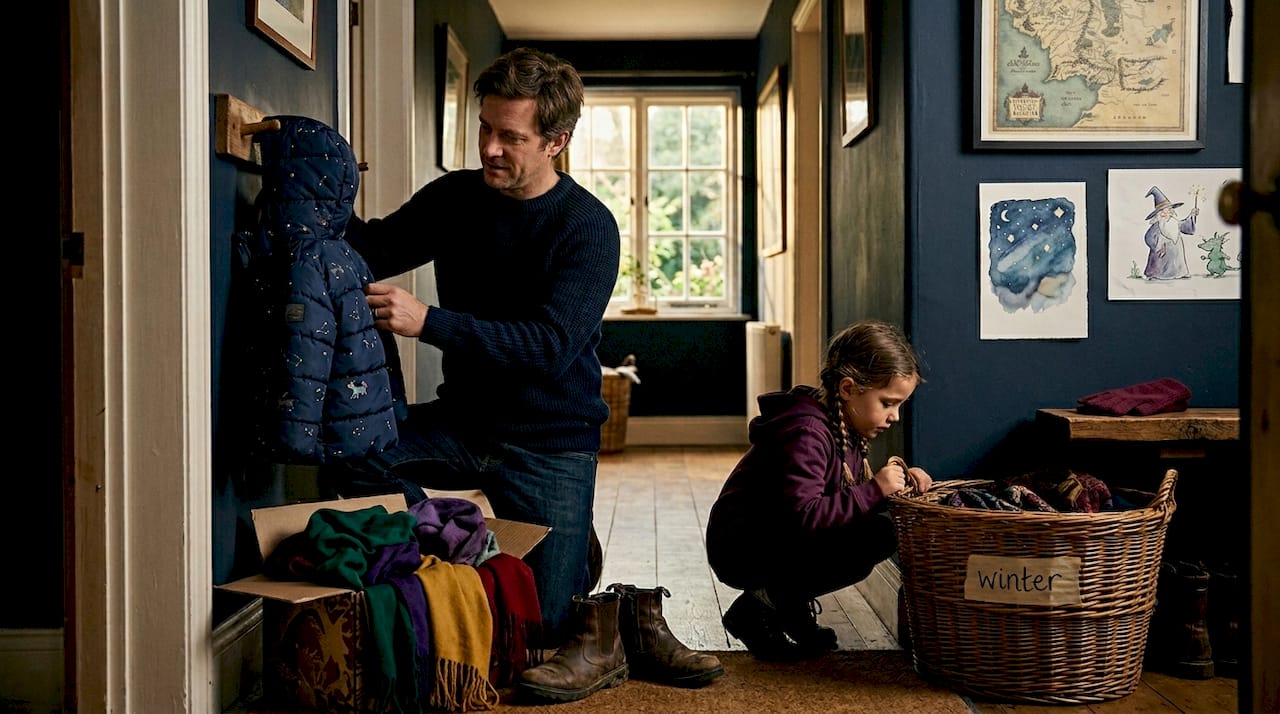
On the mental side, regular seasonal rotations reduce visual clutter in a way that directly speeds up your morning routine. When every item in your closet is weather-appropriate and intentionally chosen, decisions become faster and less draining. Studies on decision fatigue show that the more choices you face first thing in the morning, the more mental energy you burn before your day even starts.
Seasonal storage also protects your clothes. Proper garment preservation prevents the crushing and fiber stress that comes from overcrowding a closet year-round. Investment pieces like wool coats, structured blazers, and quality boots last significantly longer when they spend their off-season stored correctly rather than crammed between items you’re actively wearing.
There’s also a sustainability angle that doesn’t get enough attention. Editing your wardrobe regularly encourages what stylists call an editorial mindset. When you handle every piece twice a year, you stop buying things on impulse because you know exactly what you already own.
“The best wardrobe isn’t the biggest one. It’s the one you actually use.”
That said, seasonal wardrobes come with real challenges. The biggest one is time commitment upfront. The first rotation takes longer because you’re building the system from scratch. Unpredictable climates create another headache. If you live somewhere that swings from cold to warm in a single week, rigid seasonal rules don’t work. The solution there is a “transition box,” a small bin kept accessible with pieces that work across temperature ranges, like light cardigans, waterproof sneakers, and denim jackets.
Building a seasonal wardrobe for young adults and families
The tips for seasonal wardrobe planning shift meaningfully when you’re managing more than one person’s clothing, or when your schedule leaves little margin for lengthy closet projects. Here’s how to adapt the strategy.
For young adults, the priority is building versatile core pieces that mix and match easily. Think neutral-toned basics paired with a small selection of seasonal statement items, like a bold graphic tee in summer or a rich-colored hoodie in fall. This approach to seasonal trends lets you stay current without overbuying every season.
For families, the approach needs structure. A useful comparison:
| Approach | Best for | Key benefit |
|---|---|---|
| Per-person labeled bins | Families with 3+ members | Zero confusion about whose clothes are whose |
| Shared category bins | Couples or roommates | Faster rotation, good for smaller spaces |
| One-bin-per-season system | Single adults | Maximum simplicity, fastest swaps |
Kids’ clothing adds a layer of complexity because children outgrow things fast. Build their seasonal wardrobe slightly smaller than adults’ and declutter aggressively at each rotation. Anything that doesn’t fit comes out immediately. Anything worn out comes out too. What’s left gets stored cleanly.
Adapting rotation frequency to your climate and lifestyle matters more than following a strict calendar. A family in Minnesota needs four rotations a year. A family in Southern California might only need two. Neither approach is wrong. The right answer is the one that actually works for your household.
Pro Tip: Align your seasonal wardrobe swap with a day you already have blocked off, like a long weekend or school break. Combining it with a family activity makes it feel less like a chore and more like a reset.
For anyone wondering what to include in seasonal wardrobe updates, keeping an eye on fashion trends for 2025 and 2026 can help you decide which trend pieces are worth adding and which you can skip without regret.
My take: what seasonal wardrobe rotation actually changed for me
I’ll be honest. When I first heard about rotating a seasonal wardrobe, I thought it sounded like extra work dressed up as self-improvement. I had a full closet. Why would I box half of it up?
What changed my mind was the first morning after I did it. I opened my closet and every single item was something I could wear that day. No hunting. No second-guessing. No picking up a sweater in July and putting it back down. The decision was already made for me because I had made it deliberately, ahead of time.
The labeling system was the real unlock. Once I started using category plus season labels, retrieval became instant. I stopped treating the whole swap like a production and started treating it like a 45-minute task with a clear end point.
What I didn’t expect was how much it changed my shopping habits. When I could see exactly what I owned, I stopped buying things I already had in storage. That alone saved me money. I also got more selective about what I let into my wardrobe at all, which meant the pieces I did buy were ones I genuinely wore. If you’re hesitating, start with just one category. Pick your tops or your outerwear. Do one section this week. You’ll understand within one rotation why people who do this don’t go back.
— Josh
Refresh your seasonal wardrobe with 3wizardclothing
Building a seasonal wardrobe is as much about choosing the right pieces as it is about organizing them well. If you’re ready to update your rotation with clothing that actually reflects your personality, 3wizardclothing has exactly what you need.

From cozy fall graphic tees to bold seasonal hoodies, the collections at 3wizardclothing are built around the kind of expressive, season-ready pieces that earn their spot in any wardrobe rotation. The Hello Autumn Tee is a perfect example: soft, layerable, and genuinely fun to wear through transitional weather. If you want something with a little more fall energy, the Autumn Vibes Tee delivers seasonal style without taking itself too seriously. Shop the full range for men, women, and kids and find the pieces worth keeping in rotation.
FAQ
What is a seasonal wardrobe in simple terms?
A seasonal wardrobe is a clothing rotation system where you keep only weather-appropriate pieces in your active closet and store the rest. It typically involves cycling roughly 60% of your clothing each season.
How often should you rotate a seasonal wardrobe?
Most people rotate twice a year, in spring and fall. Those in climates with four distinct seasons benefit from rotating four times a year. Each swap takes 30 to 60 minutes with a labeled storage system in place.
What should you include in a seasonal wardrobe?
A solid seasonal wardrobe includes season-appropriate tops, bottoms, one or two outerwear pieces, two to three pairs of footwear, and a small selection of accessories. Aim for 25 to 40 pieces that create at least 30 different outfits.
How do you store off-season clothes properly?
Use vacuum bags for bulky items like sweaters and winter coats, but always choose breathable garment bags for structured pieces and delicate fabrics. Clean all garments before storage to prevent stains and pest damage.
Why is a seasonal wardrobe useful for families?
For families, a seasonal wardrobe reduces clutter across multiple closets, makes getting dressed faster for everyone, and creates natural checkpoints to donate or discard outgrown clothing, especially for kids.


